
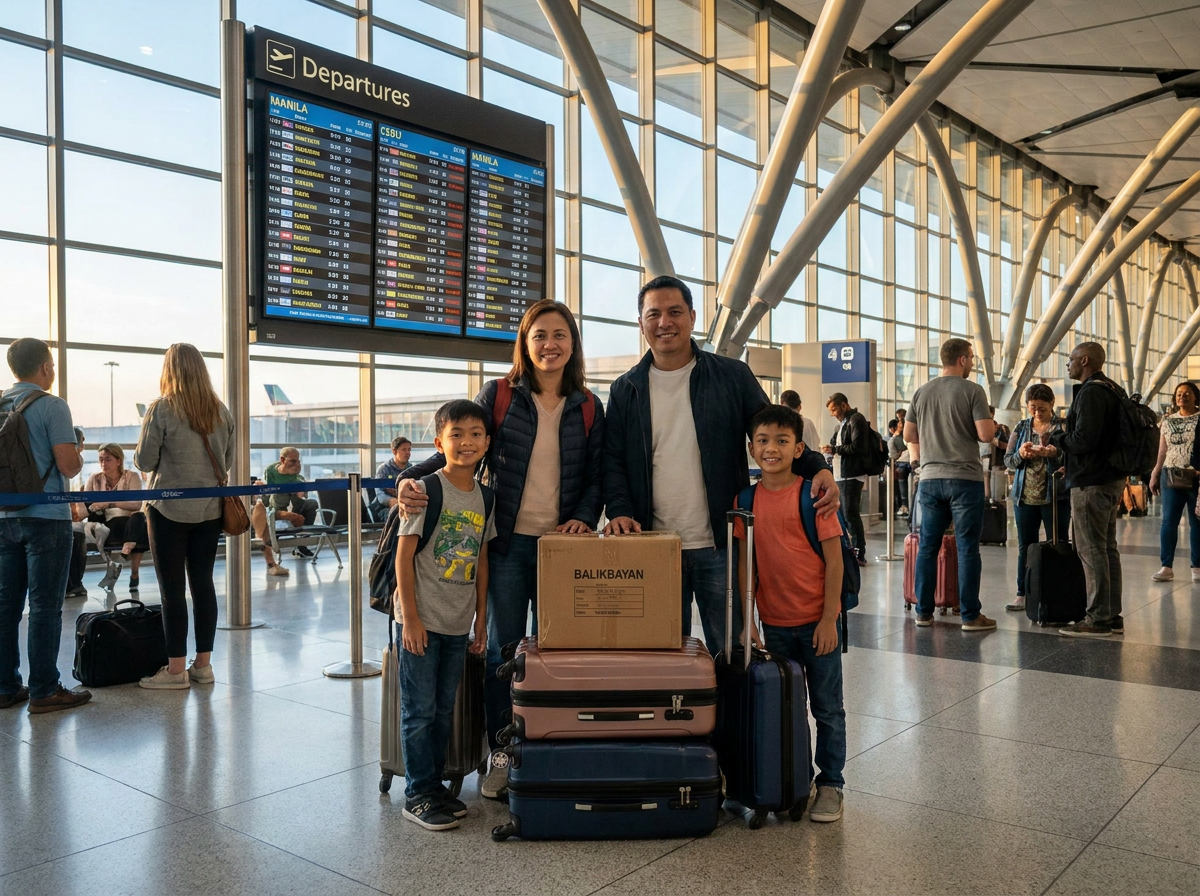
Every year, millions of Filipinos board international flights — for vacations, business, work abroad, family visits, or educational exchange. Most of them travel with one dangerous assumption: that their HMO, credit card, or government-issued PhilHealth card will protect them if something goes wrong overseas.
In most cases, it will not — or not nearly enough.
Travel Secure insurance is one of the most straightforward, most affordable, and most underutilized financial safety nets available to Filipino travelers. A single medical emergency abroad — hospitalization in Japan, an accident in Europe, or an emergency surgery in the United States — can easily cost PHP 500,000 to several million pesos. Without proper travel insurance, that cost falls entirely on the traveler or their family.
This guide explains exactly what Travel Secure insurance covers, who genuinely needs it, what the common gaps in credit card and HMO coverage are, and how to choose the plan that actually protects you — not just satisfies a visa requirement.
What Travel Secure Insurance Actually Covers
Travel Secure is a comprehensive travel insurance product designed specifically for Filipino travelers heading abroad (or, in some plans, for domestic travel as well). Unlike basic trip cancellation coverage, a full Travel Secure policy bundles several distinct protections under a single premium. Understanding what each component does — and what the typical limits are — is essential before you purchase.
Medical and Hospitalization Coverage
The most critical component. Travel Secure pays for emergency medical treatment, hospitalization, surgery, prescription medicines, and physician fees incurred abroad due to sudden illness or accident. Limits vary by plan tier — entry-level plans may cover USD 30,000 to USD 50,000, while premium plans extend to USD 100,000–250,000 or beyond.
For travel to countries with high healthcare costs — Japan, South Korea, the United States, Western Europe, Australia — higher medical limits are strongly advisable. A single night in a Japanese hospital can cost USD 2,000–5,000 without insurance.
Emergency Medical Evacuation and Repatriation
Often overlooked — and one of the most expensive benefits in practice. If a traveler requires medically supervised transport back to the Philippines or to a higher-level medical facility in a third country, medical evacuation can cost USD 20,000 to over USD 100,000 depending on the route, medical equipment required, and accompanying staff.
Repatriation of remains — the cost of returning a deceased traveler's remains to the Philippines — is similarly expensive and emotionally significant. Travel Secure policies include this benefit, which can cover embalming, casket preparation, and international shipping arrangements.
Trip Cancellation and Interruption
If you are forced to cancel or cut short a trip due to a covered event — sudden serious illness, death of an immediate family member, natural disaster at the destination, or unforeseen visa refusal (in some plans) — Travel Secure reimburses non-refundable prepaid costs. This includes airline tickets, hotel bookings, tour packages, and other prepaid expenses up to the policy limit.
Baggage Loss, Damage, and Delay
Travel Secure reimburses the cost of lost, stolen, or damaged checked baggage up to a per-item and aggregate limit. Baggage delay coverage provides a daily allowance to purchase essential items (clothing, toiletries) if your luggage is delayed by the airline beyond a defined threshold — typically 6–12 hours.
Flight Delay and Missed Connection
When a flight is delayed beyond a policy-defined period (commonly 6–12 hours), Travel Secure pays a daily or per-occurrence benefit to cover meals, accommodation, and incidental expenses while you wait. Missed connection coverage applies when a delayed inbound flight causes you to miss a connecting flight and incur additional booking costs.
Personal Accident Benefit While Traveling
Most Travel Secure plans include a personal accident component — a lump-sum accidental death and dismemberment benefit payable if the insured suffers a fatal accident or qualifying disability during the trip. This is separate from and in addition to any standalone Personal Accident insurance you may hold.
Important: Plan benefits, exclusions, and limits vary significantly between insurers and plan tiers. The headline premium is not the only factor to compare — sub-limits, exclusion clauses (pre-existing conditions, adventure sports, pandemics), and the claims process are equally important considerations.
Why Your HMO and Credit Card Are Not Enough
This is the most common misconception among Filipino travelers — and one of the most costly. Most Filipinos who carry an HMO card and a credit card believe they are covered abroad. In reality, the coverage gaps are significant.
HMO Coverage Abroad
Philippine HMO providers — regardless of how comprehensive your plan is domestically — generally limit international coverage to emergency cases only, and often cap reimbursement at very low amounts relative to actual overseas costs. Many plans require pre-authorization that is difficult to obtain in an emergency abroad. HMO networks do not extend internationally, meaning you pay out of pocket first and seek reimbursement later — if the claim is approved.
Credit Card Travel Insurance
Premium credit cards often advertise travel insurance as a complimentary benefit. The fine print is critical. Most credit card travel insurance activates only if the flight was charged entirely to that card, covers only specific benefit types (flight delays and baggage — often not medical emergencies), has low overall limits (PHP 5,000–50,000 is common for baggage; medical limits may be absent entirely), and excludes a wide range of activities and pre-existing conditions.
Credit card travel insurance is a supplementary benefit — it is not a substitute for a purpose-built travel insurance policy.
PhilHealth Abroad
PhilHealth has no coverage mechanism for medical expenses incurred outside the Philippines. A PhilHealth card provides no benefit whatsoever for overseas medical emergencies.
The practical reality: A Filipino traveler hospitalized in Tokyo without travel insurance faces a bill of PHP 300,000–1,000,000 for a serious illness requiring several days of hospitalization and medication. Neither their HMO, their credit card, nor PhilHealth will cover the full amount. The family back home absorbs the cost — often through emergency loans or liquidated savings.
Who Needs Travel Secure Insurance — and What Type
Travel Secure insurance is relevant across a wide range of Filipino traveler profiles. The right product and plan tier differ by traveler type and destination.
Vacationers and Leisure Travelers
For families or individuals traveling to popular Filipino tourist destinations — Japan, South Korea, Singapore, Thailand, Europe, the USA — a single-trip Travel Secure plan matched to the destination's healthcare cost index is the right starting point. Japan and Europe require higher medical limits; Asean destinations may allow mid-tier plans depending on length of stay.
OFWs and Balikbayan Travelers
Overseas Filipino Workers and their families traveling back and forth to the Philippines face distinct risk profiles: longer transit times, more frequent travel, and in some cases work assignments in higher-risk countries. Annual multi-trip Travel Secure plans are often more cost-effective for OFWs than purchasing single-trip coverage for each journey. Additionally, OFW contracts and POEA requirements may specify minimum travel insurance coverage levels that must be met.
Business Travelers
Frequent business travelers — executives, sales professionals, consultants traveling internationally on a regular basis — benefit most from annual multi-trip plans that provide continuous coverage across all trips within a policy year. Coverage should include business equipment (laptops, mobile devices), higher trip cancellation limits (reflecting costlier bookings), and adequate medical limits for high-cost destinations.
Students Studying Abroad
Filipino students enrolled in international universities or exchange programs face a specific challenge: many student visa and enrollment requirements mandate a minimum level of health and travel insurance coverage. Standard Travel Secure plans cover the requirement; long-term student plans are available for academic year durations. Medical coverage and mental health provisions matter significantly for students away from family support.
Visa-Required Travel (Schengen, USA, Canada, Japan)
Many countries require proof of travel insurance with specific minimum coverage levels as part of their visa application process. Schengen area countries (Europe) require a minimum of EUR 30,000 (approximately PHP 1.8 million) in medical coverage. The United States and Japan strongly recommend — and some visa categories require — proof of adequate medical coverage.
Purchasing travel insurance only to satisfy a visa requirement and choosing the cheapest possible plan is a common mistake. The plan that passes a visa check may have exclusions and sub-limits that leave you materially unprotected in practice.
Practical tip: When purchasing Travel Secure for Schengen visa purposes, confirm with your insurance provider that the policy certificate explicitly states the EUR 30,000 minimum coverage as required by embassies. Not all policies are formatted to meet embassy documentation requirements.
How to Choose the Right Travel Secure Plan: Practical Guidance
Choosing a Travel Secure plan involves more than comparing premium prices. These are the factors that genuinely differentiate plans — and that determine whether your policy actually performs when you need it.
- Destination and healthcare cost index. Japan, the USA, Canada, and Western Europe have some of the world's highest healthcare costs. Travel Secure plans for these destinations should carry medical limits of at least USD 50,000– 100,000. For Asean destinations with lower costs, mid-tier plans may be sufficient.
- Trip duration. Single-trip plans cover one journey with a defined departure and return date. Annual multi-trip plans cover unlimited trips within the policy year, each up to a maximum duration (typically 30–90 days per trip). Frequent travelers save significantly on annual plans.
- Pre-existing conditions. Most travel insurance policies exclude pre-existing medical conditions unless specifically declared and accepted at underwriting. Travelers with diabetes, hypertension, heart conditions, or other managed conditions should declare these to their insurer — and confirm exactly what is and is not covered under the specific plan being purchased.
- Adventure and sports activities. Standard plans often exclude injuries from recreational activities classified as hazardous — skiing, scuba diving, motorcycle riding, trekking above certain altitudes. If your trip includes these activities, confirm they are explicitly covered or purchase an adventure sports endorsement.
- Direct insurer billing vs. reimbursement. Some Travel Secure plans include 24/7 assistance hotlines that coordinate directly with overseas hospitals — meaning the insurer pays the hospital directly (cashless or direct billing). Others operate on a pay-first, reimburse-later basis. For travelers without significant overseas cash access, direct billing arrangements are significantly more practical in an emergency.
- Claims documentation requirements. Review the claims process before you travel. Know what documents to collect — medical reports, receipts, police reports for theft, airline delay certificates — and how to submit them. Claims that fail are often due to missing documentation, not missing coverage.
The right question to ask before purchasing: Not “which plan is cheapest?” — but “if I am hospitalized for a week in the country I am visiting, does this plan cover the realistic cost?” If the answer is uncertain, consult an independent insurance advisor who can compare options across providers and give you an honest assessment.
Get a Free Quote Today
Ready to protect what matters most? Our insurance experts are here to help you find the right Travel Secure coverage at the best price. OneNetworx Insurance Agency compares options across multiple top Philippine insurers — so you travel with genuine protection, not just a visa requirement checked off.
🌐 www.onenetworxinsurance.com
About the Author
Angelo Villamejor is a former financial wealth branch manager at a top Philippine life insurance company and a GAMA Awardee, with nearly three decades of experience spanning insurance brokerage, bancassurance, non-life and life insurance leadership. He leads OneNetworx Insurance Agency with a focus on giving Filipino families and businesses unbiased, expert guidance to find coverage that holds up when it matters most.