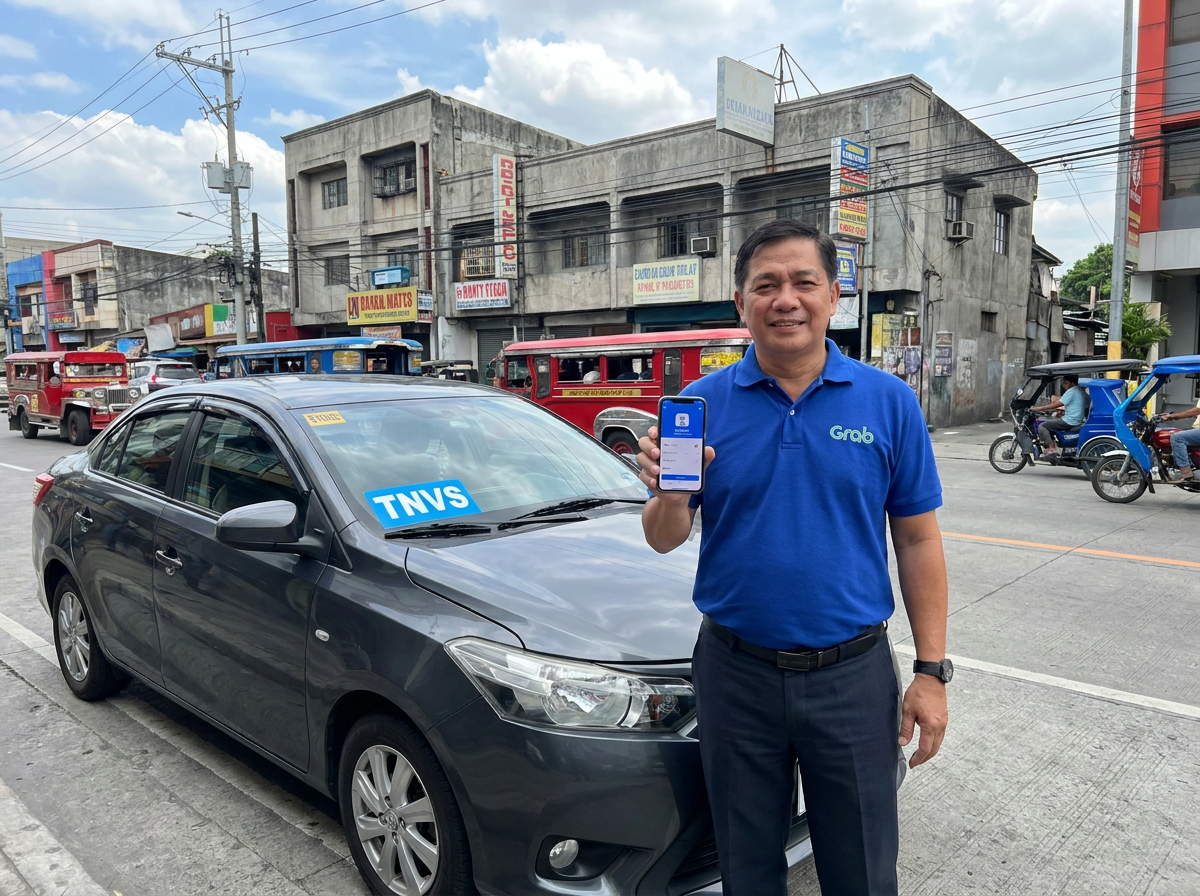
If you drive for a Transport Network Vehicle Service (TNVS) platform in the Philippines — whether that is Grab, Angkas, or another Land Transportation Franchising and Regulatory Board (LTFRB)-accredited ride-hailing service — your vehicle is your primary income-generating asset. Every trip you accept, every kilometre you drive, represents your livelihood.
Yet one of the most common and costly mistakes among TNVS operators in the Philippines is operating with either no valid insurance or — just as problematic — the wrong type of insurance. Many drivers assume that because they have a private motor car insurance policy, they are protected while on the road as a ride-hailing driver. They are not.
This guide explains exactly what TNVS Secure insurance is, what it covers, why it is mandatory under Philippine regulations, and what practical steps every TNVS operator should take to ensure they are properly protected — before the next trip, not after the next accident.
What Is TNVS Secure Insurance?
TNVS Secure is a specialized motor insurance product designed specifically for vehicles registered and accredited under the LTFRB as Transport Network Vehicles. It is distinct from standard private car insurance in one critical way: it recognizes and covers the commercial use of the vehicle.
Under Philippine insurance law and LTFRB regulations, all TNVS operators are required to maintain valid insurance coverage as a condition for the issuance and renewal of their Certificate of Public Convenience (CPC). Without compliant insurance, your franchise can be suspended or revoked — meaning the vehicle you depend on for income can be legally barred from accepting passengers.
TNVS Secure insurance typically encompasses the following coverage components:
- Compulsory Third-Party Liability (CTPL) — mandatory under Republic Act No. 10607, covering bodily injury and death of third parties arising from covered accidents
- Third-Party Property Damage (TPPD) — covering damage caused to another person's vehicle or property during a covered accident
- Own Damage and Theft (ODDS) — covering repair or replacement of your own vehicle following a covered accident or theft
- Passenger Liability — covering medical expenses, hospitalization, and death benefits for passengers riding in your vehicle at the time of a covered accident
- Acts of Nature (AON) — covering damage caused by typhoons, flooding, lightning, and other natural perils — critical in the Philippines, which experiences an average of 20 typhoons annually
- Personal Accident Coverage for the Driver — available as an add-on in many TNVS Secure products, providing compensation for injuries sustained by the driver-operator while on duty
Coverage limits, premium structures, exclusions, and benefit sub-limits vary between insurance providers. This variation is precisely why working with an independent, non-tied insurance agency — rather than purchasing from a single insurer directly — gives TNVS operators a meaningful advantage when selecting their coverage.
Why Your Standard Private Car Insurance Is Not Enough
This is the most important point in this guide, and it is one that costs Filipino TNVS drivers millions of pesos in out-of-pocket expenses every year.
Standard private motor car insurance policies in the Philippines contain a standard exclusion clause: coverage does not apply when the vehicle is being used for hire, reward, or commercial purposes. The moment you activate a ride-hailing application and accept a booking from a paying passenger, your vehicle transitions from personal to commercial use — and your private insurance policy's protection ends.
What this means in practice: If you are involved in an accident while carrying a Grab passenger and you attempt to file a claim under your standard private car insurance policy, the insurer can — and under Philippine insurance law, will — lawfully deny that claim on the grounds of material breach. You will be personally liable for vehicle repair costs, third-party property damage, medical expenses of injured passengers, and any legal action arising from the accident.
The financial consequences of a single uninsured accident while operating as a TNVS driver can include:
- Vehicle repair costs: ₱30,000–₱200,000+ depending on severity and vehicle type
- Third-party property damage claims: ₱50,000–₱500,000+ depending on the vehicles and property involved
- Passenger hospitalization and medical expenses: ₱20,000–₱150,000+ per injured passenger
- Legal fees and civil liability exposure: potentially unlimited depending on injury severity and legal action
A single serious accident without TNVS Secure coverage can result in financial losses that exceed several years of earnings as a ride-hailing driver. The premium for proper TNVS Secure coverage is a fraction of that exposure.
LTFRB Compliance: What TNVS Operators Must Know
The LTFRB requires all TNVS operators to maintain valid insurance coverage as a continuous condition of their franchise. The following compliance requirements are non-negotiable:
Mandatory CTPL Coverage
All motor vehicles operating on Philippine roads — including TNVS — must carry a valid Compulsory Third-Party Liability (CTPL) policy. This is a baseline requirement for LTO vehicle registration and LTFRB franchise issuance. However, CTPL alone provides only minimal bodily injury coverage for third parties. It does not cover your own vehicle, your passengers, or third-party property damage.
Comprehensive TNVS Coverage Requirement
Beyond the basic CTPL, the LTFRB requires TNVS franchise holders to maintain insurance coverage appropriate to the commercial nature of their operations. This means a TNVS-specific policy that covers passengers, third-party liability, and the vehicle itself — not a private car policy with commercial use excluded.
Annual Renewal Aligned With Franchise Dates
Insurance coverage must be renewed annually and must remain valid throughout the franchise period. A lapse in coverage — even for a single day — creates both a compliance gap with the LTFRB and unprotected exposure on the road. It is advisable to initiate renewal at least 30 days before expiry to avoid processing delays.
Compliance note: When renewing your LTFRB franchise, you will be required to present proof of valid insurance coverage. Ensure your Certificate of Cover (COC) or insurance policy document is current, bears the correct vehicle details, and specifies TNVS use. An insurance advisor can confirm whether your documentation meets LTFRB requirements before you submit it.
Practical Tips for TNVS Operators Getting Insured
Tip 1: Work With an Independent Insurance Agency
A tied agent — one who works exclusively for a single insurance company — can only offer you that company's products at that company's pricing. An independent insurance agency like OneNetworx compares TNVS Secure options across multiple Insurance Commission-accredited providers, so you can make a genuinely informed decision based on coverage value, not limited to one offering.
Tip 2: Declare Your Vehicle's Use Accurately and Fully
When applying for TNVS Secure insurance, always disclose accurately that your vehicle is used for TNVS operations. Declare the LTFRB CPC number, the transport network company you are accredited with, and your approximate daily trip volume if asked. Withholding this information to secure a lower premium constitutes material misrepresentation and will result in a denied claim when it matters most.
Tip 3: Do Not Default to Minimum Limits
The minimum CTPL limits set by law are far below what a serious accident can cost. TNVS operators cover substantially more kilometres than private car owners, carry passengers daily, and operate in congested urban traffic where accident risk is elevated. Your insurance limits should reflect your actual exposure, not just the regulatory minimum. A professional insurance advisor can help you calculate appropriate limits based on your vehicle type, operating area, and trip frequency.
Tip 4: Ensure Acts of Nature Coverage Is Included
The Philippines sits in the Pacific typhoon belt. Flood damage, storm surge, and wind damage are not hypothetical risks — they are annual occurrences in most parts of the country. Confirm that your TNVS Secure policy includes Acts of Nature coverage. Without it, a single typhoon season can leave your vehicle — and your income — out of commission for weeks.
Tip 5: Keep All Documents Accessible
When applying for TNVS Secure insurance, prepare and keep accessible the following:
- Official Receipt and Certificate of Registration (OR/CR)
- LTFRB Certificate of Public Convenience (CPC)
- Driver's license and professional driver's license
- Accreditation document from your transport network company (e.g., Grab Partner Agreement)
- Vehicle photos (front, rear, left side, right side, odometer reading)
Having these documents ready before contacting your insurance advisor significantly accelerates the quotation and issuance process.
Common misconception addressed: Some TNVS operators believe that coverage provided by their transport network company (such as Grab's partner insurance) is sufficient on its own. This coverage, where it exists, is typically limited in scope and only active during specific phases of a trip. It does not replace a comprehensive TNVS Secure policy that protects you throughout the full operational period, including while the app is active but no passenger is yet onboard.
Operating With Confidence: The Right Coverage Matters
Being a TNVS operator is a business. Like any business, it carries real financial risks that must be managed proactively. TNVS Secure insurance is not an optional add-on or a bureaucratic requirement to be minimized — it is the financial foundation that allows you to operate with confidence every day.
A well-structured TNVS Secure policy protects your vehicle, your passengers, other road users, your compliance standing with the LTFRB, and ultimately, your income. The cost of proper coverage is predictable and manageable. The cost of operating without it — when an accident occurs — is not.
If you are currently operating with standard private car insurance, or with coverage that has not been reviewed in the past year, now is the right time to speak with an independent insurance advisor who can ensure your protection is structured correctly for commercial TNVS operations.
Get a Free Quote Today
Ready to protect what matters most? Our insurance experts are here to help you find the right TNVS Secure coverage at the best price. OneNetworx Insurance Agency is an independent, non-tied agency — we compare options from multiple top Philippine insurers so you get unbiased guidance, not a single-company pitch.
🌐 www.onenetworxinsurance.com
About the Author
Angelo Villamejor is a former financial wealth branch manager at a top Philippine life insurance company and a GAMA Awardee, with nearly three decades of experience spanning insurance brokerage, bancassurance, non-life and life insurance leadership. He leads OneNetworx Insurance Agency with a focus on giving Filipino families and businesses unbiased, expert guidance to find coverage that holds up when it matters most.