
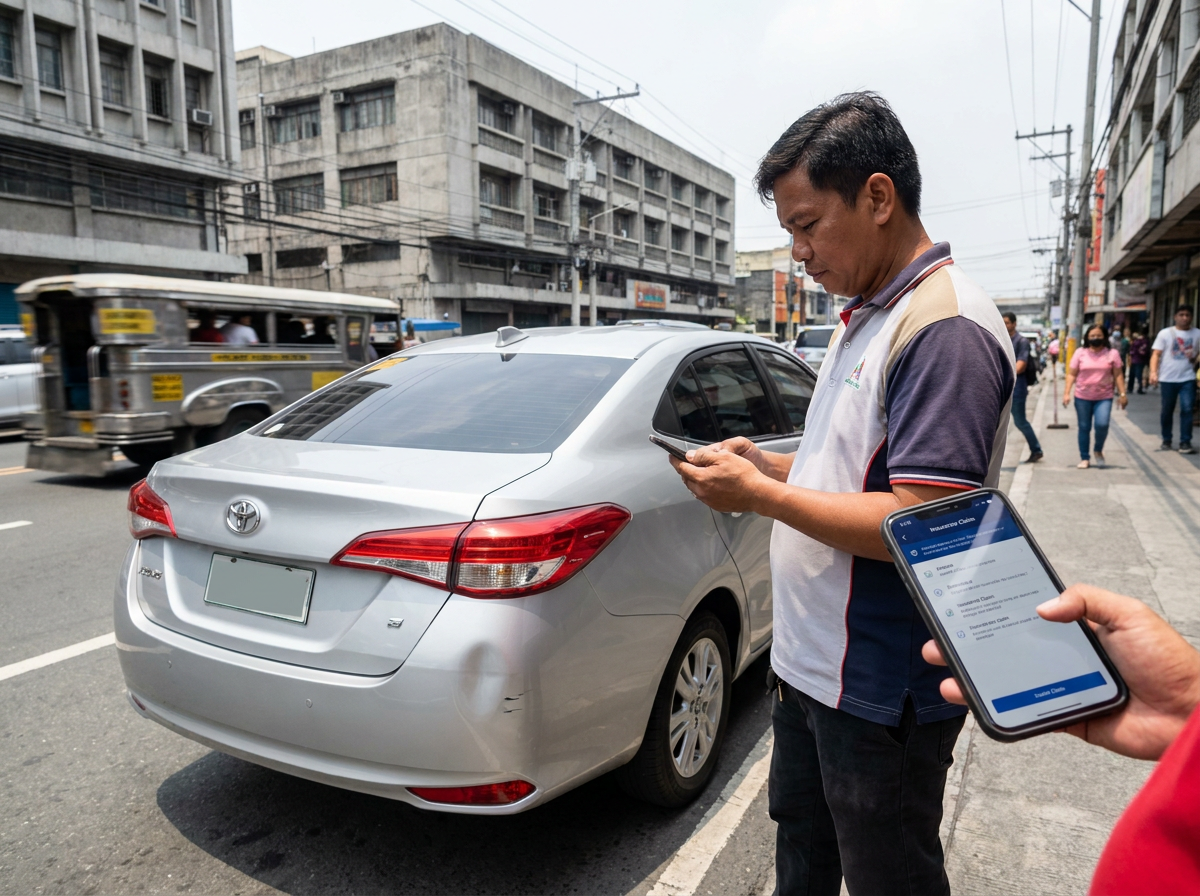
An accident on the road is stressful for any driver. For a TNVS operator in the Philippines, it carries an additional layer of complexity: your vehicle is your livelihood, your LTFRB accreditation depends on your compliance record, and the insurance process for commercial ride-hailing vehicles works differently from standard private car insurance.
Yet many Filipino TNVS drivers who carry TNVS Secure insurance have never read their policy carefully — and have no clear plan for what to do if something goes wrong. The result: delayed claims, disputed coverage, and out-of-pocket costs that a proper policy should have covered.
This guide walks you through how TNVS Secure coverage actually works, what to do in the critical minutes and days after an accident, and how to file a claim that is processed efficiently rather than denied on a technicality.
What TNVS Secure Insurance Covers — and What It Does Not
TNVS Secure is a specialized motor insurance product designed for vehicles accredited under the LTFRB's Transport Network Vehicle Service framework. It addresses a gap that standard private car insurance policies explicitly exclude: coverage while the vehicle is being used for commercial passenger transport.
Core Coverage Components
A standard TNVS Secure policy typically includes the following:
- Own damage and theft — covers repair or replacement costs for your vehicle following a collision or theft, subject to the insured declared value and policy limits.
- Third-party liability — covers bodily injury and property damage caused to other parties in an accident for which you are at fault. This is mandatory under Philippine law.
- Personal accident benefit — provides a fixed benefit for the driver in the event of accidental death or disablement resulting from a covered vehicular accident.
- Passenger liability — covers injury to or death of paying passengers while aboard your TNVS-accredited vehicle during a commercial trip.
The app-status gap: Many TNVS Secure policies define coverage in terms of whether the driver was logged into the platform app at the time of the incident. An accident that occurs while the app is offline — meaning the driver is operating the vehicle purely for private use — may fall outside the TNVS Secure policy and be covered instead (or not) by a separate private motor policy. Understanding this distinction before an accident happens is critical.
Common Exclusions to Know
TNVS Secure policies, like all non-life insurance contracts, carry exclusions. The most commonly triggered ones in claims disputes include:
- Driving under the influence of alcohol or drugs at the time of the incident
- Operating a vehicle without a valid and appropriate driver's license
- Using the vehicle for a purpose not covered under the policy (e.g., hauling goods, operating outside the LTFRB-accredited service area)
- Damage resulting from wear and tear, mechanical breakdown, or gradual deterioration
- Incidents occurring after the policy has lapsed due to non-renewal or non-payment of premiums
What to Do Immediately After an Accident
The actions you take in the first thirty to sixty minutes after an accident directly affect the outcome of your insurance claim. Here is the correct sequence:
1. Ensure Safety First
Check on all persons involved — your passenger, yourself, and anyone in the other vehicle. Call emergency services (911) if there are injuries. Do not move vehicles unless they are creating a serious safety hazard and document their positions before doing so.
2. Do Not Admit Fault or Make Informal Settlements
This is one of the most common and costly mistakes Filipino drivers make. An informal cash settlement at the scene — even a seemingly minor one — can be used by the other party to claim additional damages later. It also potentially voids your insurance claim if your insurer's claims conditions require that all disputes be reported to them before any settlement is made. Acknowledge the incident politely; do not admit liability.
3. Document Everything
Use your phone camera immediately. Photograph:
- Vehicle positions before any movement
- Damage to your vehicle and the other vehicle(s) involved
- License plates of all vehicles involved
- Road conditions, traffic signals, and surrounding environment
- Any visible injuries (with consent where possible)
- The other driver's license and registration documents
Also take a screenshot of your TNVS platform app showing your trip status, driver status, and timestamp at the time of the incident. This documentation directly supports your claim that you were on an active commercial trip.
4. File a Police Report
A Motor Vehicle Accident Report (MVAR) from the Philippine National Police Traffic Management Group (TMG) is a required document for almost every insurance claim in the Philippines. File it at the nearest TMG office or traffic enforcement unit as soon as possible after the accident. Do not wait; some insurers impose strict timelines on when a police report must be filed for the claim to be accepted.
5. Notify Your Insurer Immediately
Most TNVS Secure policies require notification of the insurer within 24 to 72 hours of the incident. Call your insurance provider's claims hotline as soon as you have ensured safety and documented the scene. Delayed notification is a common reason for claims complications — even when the accident itself is clearly covered.
Filing Your TNVS Secure Insurance Claim: The Full Process
Once you have reported the incident, the formal claims process begins. Here is what to prepare and expect:
Documents Typically Required
- Completed insurance claim form (provided by your insurer)
- Copy of your motor insurance policy
- Valid driver's license
- Official Receipt and Certificate of Registration (OR/CR) of the vehicle
- LTFRB accreditation certificate for your TNVS unit
- Police report or MVAR
- Photos of the damage and incident scene
- Screenshot or log of your TNVS platform app trip status at the time of the incident
- Repair estimate from an accredited repair shop (for own damage claims)
- Medical certificates and receipts (for personal injury claims)
The Adjuster's Assessment
After you submit your documents, your insurer will assign a claims adjuster to inspect the vehicle and assess the damage. Be present for this inspection if possible. Ask questions about the coverage assessment — particularly if the adjuster is characterizing any damage as pre-existing or excluded from coverage. You have the right to request a written explanation of any coverage determination.
Authorized vs. Non-Authorized Repair Shops
Many Philippine insurers require that vehicle repairs be carried out at their authorized network of repair shops. Taking your vehicle to a non-accredited shop — even one you trust — can result in the repair costs being denied or reimbursed at a lower rate. Confirm the repair shop requirement with your insurer before you drop off your vehicle.
Why Claims Get Denied — and How to Protect Yourself
Understanding the most common reasons for TNVS Secure claim denials allows you to actively prevent them.
- Late reporting: Failing to notify the insurer within the policy's required timeframe is the most common procedural denial reason. Know your policy's reporting window before an accident happens.
- Expired policy at the time of the incident: TNVS operators juggling multiple LTFRB renewal requirements sometimes allow their insurance to lapse. A lapsed policy provides no coverage — and no grace period applies to a claims event.
- Misrepresentation at policy issuance: If the vehicle use, modification details, or driver history declared at policy inception were inaccurate — intentionally or not — the insurer may void coverage.
- Informal settlements made before reporting: If you settled part of the liability informally at the scene, some policy conditions treat this as a prejudicial admission that voids the insurer's subrogation rights.
The most effective protection against all of these scenarios is working with an insurance advisor — not purchasing a policy online and hoping for the best. An independent advisor who understands TNVS Secure products across multiple Philippine insurers will ensure your policy is correctly structured, your declarations are accurate, and you understand the claims obligations before you ever need to use the coverage.
A practical tip: Save your insurer's claims hotline, your policy number, and your agent's contact in a labeled folder in your phone right now — before an accident happens. In the stress of an actual incident, you will not be able to search for these details efficiently. A few seconds of preparation today prevents a critical delay when it matters most.
Get a Free Quote Today
Ready to protect what matters most? Our insurance experts are here to help you find the right coverage at the best price. OneNetworx Insurance Agency compares TNVS Secure options across multiple top Philippine insurers — so you are properly covered and clearly understand your policy before you ever need to file a claim.
🌐 www.onenetworxinsurance.com
About the Author
Angelo Villamejor is a former financial wealth branch manager at a top Philippine life insurance company and a GAMA Awardee, with nearly three decades of experience spanning insurance brokerage, bancassurance, non-life and life insurance leadership. He leads OneNetworx Insurance Agency with a focus on giving Filipino families and businesses unbiased, expert guidance to find coverage that holds up when it matters most.