

I remember sitting across from a prospect years ago — a man in his early forties, successful enough, with a wife, two kids in high school, and a small trucking business he'd built over a decade. My colleague had been presenting for nearly forty minutes. Premiums. Riders. Variable unit-linked versus traditional whole life. The difference between a 5-year pay and a 10-year pay structure. The projected cash value at year fifteen. The surrender charges.
The man was nodding. That particular kind of nodding that means nothing — the nod of someone who has already left the room in his mind.
I watched his eyes. They were not the eyes of a person making a decision about his family's future. They were the eyes of someone waiting for it to end.
We lost him that day. Not because the product was wrong. Not because my colleague didn't know what he was talking about. We lost him because we spent forty minutes talking about the vehicle and never once told him where it was going.
It took me years — and I mean real years, not a sales training weekend — to understand what was actually happening in that room, and in every room like it.
Here is the lesson as I have come to live it: people do not buy the past. They buy the future. Specifically, they buy their future, or the future they imagine for the people they love. And they make that calculation not by weighing features against each other, but by asking one question, usually not out loud: What happens to them if I do this? What changes?
In life insurance, we have a product that answers that question more powerfully than almost anything else a person can buy. And yet — and this is the thing I keep coming back to — most agents spend ninety percent of the conversation on the plane and ten percent on the destination. They should be doing the opposite.
The plane is the premium, the coverage amount, the policy document, the riders, the company rating, the payout schedule. These things matter. But they are not why anyone cries with relief after signing. They are not what a widow thinks about when she makes the mortgage payment in the month after her husband dies.
The destination is what she thinks about. And that is what we should be selling.
What the Destination Actually Looks Like
Let me be specific about what the destination looks like in Filipino life insurance, because it is not abstract.
It is a wife who does not have to sell the house in the year after she loses her husband. It is children who finish college — who walk across that stage and receive their diplomas — even though the person who promised to pay for it is gone. It is a father who built a business with his bare hands and knows, with certainty, that the business will survive him. It is a set of aging parents who will not have to move in with their children because their son or daughter made one decision in a two-hour meeting.
We talk often in this country about the weight of being the breadwinner. It is not just financial pressure — it is a kind of identity, a promise made silently every day to everyone who depends on you. A man who provides for his family carries that promise in his chest like something sacred. And the deepest fear is not death itself. The deepest fear is this: What happens to them when I am no longer here to keep the promise?
That is what life insurance answers. Not the premium. Not the VUL illustration. The promise.
What the Wrong Conversation Sounds Like
Here is what the wrong conversation sounds like. I have heard it a hundred times, and I am not above admitting I have given versions of it myself:
“So this plan has a critical illness rider, and the premium structure is set up on a 5-year pay, which means by year six, you're fully paid up. Now the difference between this and the variable unit-linked option is the investment component — here, your premium goes partly into a fund, and the fund performance determines your cash value at maturity. You have the option to switch funds every quarter...”
The prospect is thinking about his lunch order.
What he needs to hear — what he came into that room needing to hear, even if he doesn't know it yet — is something closer to this:
“If you're gone tomorrow, what does your family's life look like in six months? In a year? Who pays the tuition? Who covers the mortgage? What I want to show you is how that changes. How you can walk out of here today knowing that whatever happens, they are not left to figure that out alone.”
One conversation sells features. The other sells peace of mind. And peace of mind is something people will pay for.
The Practical Shift
The practical shift is not about scripts. It is about where you put your attention when you walk into a room.
Ask about what they are protecting before you ask about what they are buying. Find out who depends on them, and what those people are counting on. Find out what would be unacceptable — what they cannot let happen to the people they love. Then show them how this decision closes that gap.
The features come after, in service of the answer you've already found together. Not before, as a substitute for it.
I started OneNetworx Insurance because I believed — and still believe — that Filipinos deserve access to honest guidance. Not tied to one company. Not driven by one commission structure. Guidance that starts with the person across the table and works outward from there.
That principle is not a marketing line. It is the same thing I learned watching a man's eyes glaze over in a conference room twenty years ago, listening to forty minutes of the wrong conversation.
What he needed was someone to help him see the future clearly. His future, and the future of everyone counting on him.
That is what this work is supposed to be. When we remember that, everything else — the product, the features, the structure — falls into its proper place.
“And the right people start listening.”
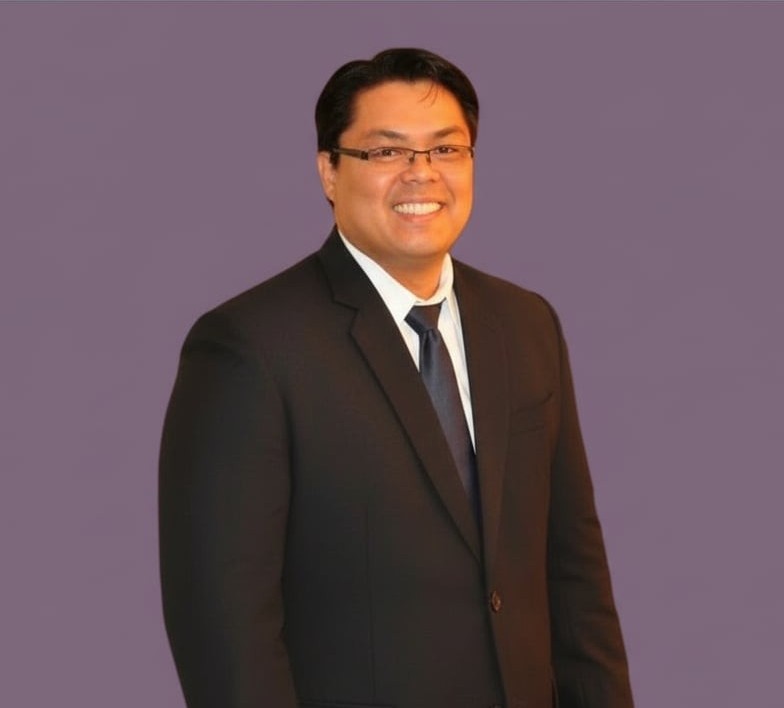
Angelo "Jojo" Villamejor
President & CEO, OneNetworx Insurance Agency
Angelo "Jojo" Villamejor brings nearly three decades of insurance expertise to OneNetworx Insurance Agency. His extensive experience spans insurance brokerage, bancassurance, non-life and life insurance, with leadership positions across all levels of the industry. A recognized marketing expert with a Doctorate in Business, Jojo's vision and integrity have positioned OneNetworx as a trusted insurance partner for thousands of Filipinos.