
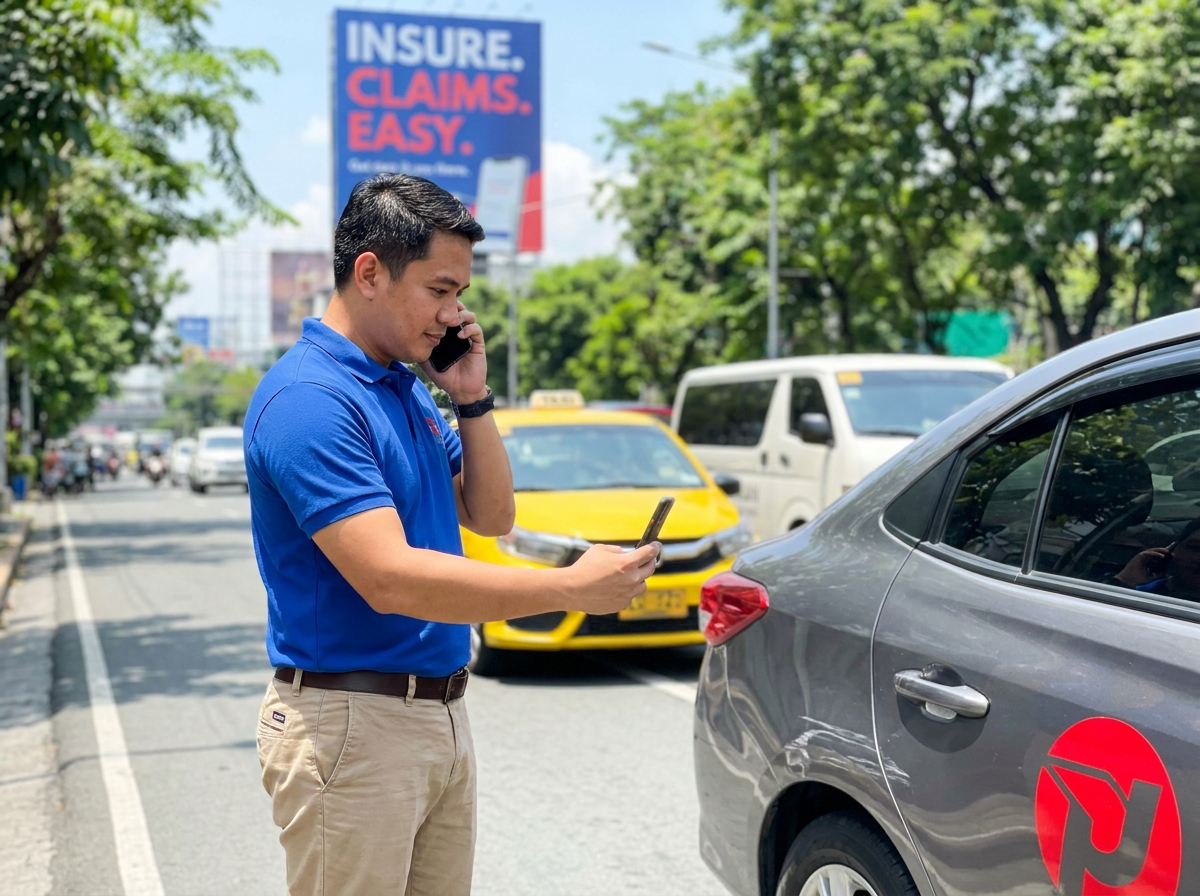
You have comprehensive motor car insurance. You have been paying your premiums faithfully. Then an accident happens — and suddenly, knowing you are insured is not enough. The next question is: what do you actually do?
Many Filipino car owners discover, at the worst possible moment, that they do not know how to file a motor car insurance claim properly. A wrong move in the first few hours after an accident — leaving the scene without documentation, failing to notify the insurer on time, or signing an admission of fault — can seriously compromise your claim. In some cases, it can result in a denial.
This guide walks through the motor car insurance claims process in the Philippines from start to finish — what to do at the scene, how to notify your insurer, what documents to prepare, how the assessment process works, and the practical tips that help ensure your claim is settled fairly and quickly.
Step 1: What to Do Immediately After the Accident
The actions you take in the first minutes after an accident are critical — both for your safety and for your insurance claim. Here is exactly what to do.
Ensure Safety First
Before anything else, check for injuries — yourself, your passengers, and anyone in the other vehicle or involved in the incident. If anyone is injured, call emergency services (911) immediately. If the vehicles can be moved safely and are blocking traffic, move them to the roadside. Turn on hazard lights and use road triangles or flares if available to alert other drivers.
Document Everything Before Anything Moves
This is the single most important step for your insurance claim. Before any vehicles are moved, use your smartphone to photograph and video the scene thoroughly:
- All vehicle damage — every dent, scratch, and point of impact on all vehicles involved, from multiple angles
- The positions of all vehicles — take wide shots showing the layout of the accident scene in relation to the road, lane markings, and any road signs
- License plates — clearly photograph the license plates of all vehicles involved
- Surrounding context — road conditions, skid marks, debris, traffic signals, weather conditions, and any surveillance cameras in the area
- Injuries — only if it is appropriate and does not interfere with medical assistance
Exchange Information with the Other Party
Collect the following from the other driver:
- Full name and contact number
- Driver's license number and expiry date
- Vehicle OR (Official Receipt) and CR (Certificate of Registration) details
- Insurance company name and policy number
- Names and contact numbers of any witnesses
Critical warning: Do not sign any document at the scene unless it is an official police blotter or report. Do not make any written or verbal admission of fault. Even apologizing casually can be used against your claim. Let the insurance companies and, if needed, the courts determine liability.
File a Police Report
For any accident involving injury, significant property damage, or a dispute about fault, you must file a police report with the nearest police station. In the Philippines, a police report (blotter) is almost always required by the insurance company as part of the claims documentation. Do not leave the scene of a serious accident before law enforcement arrives and documents the incident.
Step 2: Notify Your Insurance Company Promptly
After securing the scene and ensuring everyone's safety, notify your insurance company as soon as possible — ideally within 24 to 48 hours of the accident. Most comprehensive motor car insurance policies in the Philippines contain a timely notice clause requiring the policyholder to report incidents within a specified period. Failure to notify within this window can give the insurer grounds to complicate or deny your claim.
When you call your insurer, have the following ready:
- Your policy number
- Date, time, and location of the accident
- A factual description of what happened
- The other party's details (if a third party is involved)
- Whether injuries occurred
- Whether a police report was filed
The insurer will assign a claims reference number and advise you on the next steps, including which accredited repair shops or appraisal centers to visit for vehicle assessment. Keep a record of your claims reference number and the name of the representative you spoke with.
Practical tip: Save your insurance company's claims hotline number in your phone now — before you ever need it. In the stress and confusion following an accident, searching for a hotline number is an unnecessary obstacle. Many Philippine insurers also have mobile apps where you can report a claim directly.
Step 3: Prepare Your Claims Documents
A complete, well-organized set of documents is the single most effective way to accelerate your claims settlement. Incomplete submissions are the primary reason claims in the Philippines take longer than necessary. Here is the standard document checklist for a motor car insurance claim:
For All Claims (Own Damage and Theft)
- Duly accomplished Claims Form — provided by the insurer; complete all sections accurately
- Original copy of the insurance policy
- Official Receipt (OR) and Certificate of Registration (CR) — must be valid and current at the time of the accident
- Driver's license — of the person driving at the time of the incident; must be valid and appropriate for the vehicle type
- Police report / blotter — from the nearest police station with jurisdiction over the area
- Photographs of the damage — the more comprehensive, the better
- Repair estimate — from an accredited repair shop; your insurer will provide a list of accredited shops, and using a non-accredited shop without prior insurer approval may affect your claim
Additional Documents for Third-Party Liability Claims
- Demand letter from the third party (if submitted)
- Medical certificates and hospital records (if bodily injury is involved)
- Death certificate and proof of relationship (if the claim involves a fatality)
- OR/CR and license details of the third-party vehicle
- Proof of ownership of damaged third-party property
For Theft Claims
- Police report of the theft filed immediately upon discovery
- Sworn statement / affidavit of loss
- Original keys of the vehicle (all sets)
- Certificate of non-recovery from the Philippine National Police (after a prescribed waiting period — typically 30 days)
Step 4: The Assessment and Settlement Process
After you submit your documents, the insurer will assign a claims adjuster to assess the damage and validate your claim. Understanding how this process works will help you navigate it with confidence.
Vehicle Damage Assessment
The insurer's adjuster — or an independent surveyor appointed by the insurer — will inspect the damaged vehicle, usually at an accredited repair shop. The adjuster prepares a survey report estimating the cost of repairs and confirming that the damage is consistent with the reported incident. If the insurer and the repair shop agree on the repair scope and cost, repairs proceed.
For vehicles declared a total loss — where the repair cost exceeds a defined percentage of the vehicle's market value (typically 75% or more) — the insurer will offer a settlement based on the vehicle's actual cash value at the time of loss, less any applicable deductibles and the salvage value of the damaged vehicle.
Understanding Deductibles
Most comprehensive motor car insurance policies in the Philippines include a deductible — the portion of the repair cost that the policyholder bears before the insurer pays the balance. Deductibles are stated in the policy schedule; typical ranges for personal vehicles are ₱2,000 to ₱5,000 for own-damage claims, though they vary by insurer and coverage tier. Review your policy schedule to know your deductible before a claim arises.
Common Reasons Claims Are Delayed or Denied
In my experience across nearly three decades in the Philippine insurance industry, the most common avoidable reasons for claims complications are:
- Expired OR/CR or driver's license — if the vehicle registration or the driver's license was expired at the time of the accident, most policies will not respond
- Use of vehicle outside declared purpose — a vehicle insured for private use being used commercially (e.g., as a TNVS or delivery vehicle) at the time of the loss is typically excluded
- Unauthorized driver — the driver must hold a valid and appropriate license for the vehicle type
- Driving under the influence — alcohol or substance impairment is an exclusion in virtually every policy
- Delayed notification — not reporting the claim within the policy's required timeframe
- Incomplete documentation — missing police report, missing OR/CR, or incomplete claims form
- Using a non-accredited repair shop without prior approval — always confirm authorization before proceeding with repairs
Know your policy before you need it: The most effective preparation for a claims situation is reading your policy carefully when you receive it — not when you are standing at an accident scene. Know your deductible, your insurer's claims hotline, the list of accredited repair shops near you, and any exclusions that apply to your specific vehicle use. If any term in your policy is unclear, ask your insurance advisor to explain it before a claim arises.
Get a Free Quote Today
Ready to protect what matters most? Our insurance experts are here to help you find the right coverage at the best price. OneNetworx Insurance Agency compares options from multiple top Philippine insurers — so you get unbiased guidance, fair claims support, and a policy that actually works when you need it.
🌐 www.onenetworxinsurance.com
About the Author
Angelo Villamejor is a former financial wealth branch manager at a top Philippine life insurance company and a GAMA Awardee, with nearly three decades of experience spanning insurance brokerage, bancassurance, non-life and life insurance leadership. He leads OneNetworx Insurance Agency with a focus on giving Filipino families and businesses unbiased, expert guidance to find coverage that holds up when it matters most.