
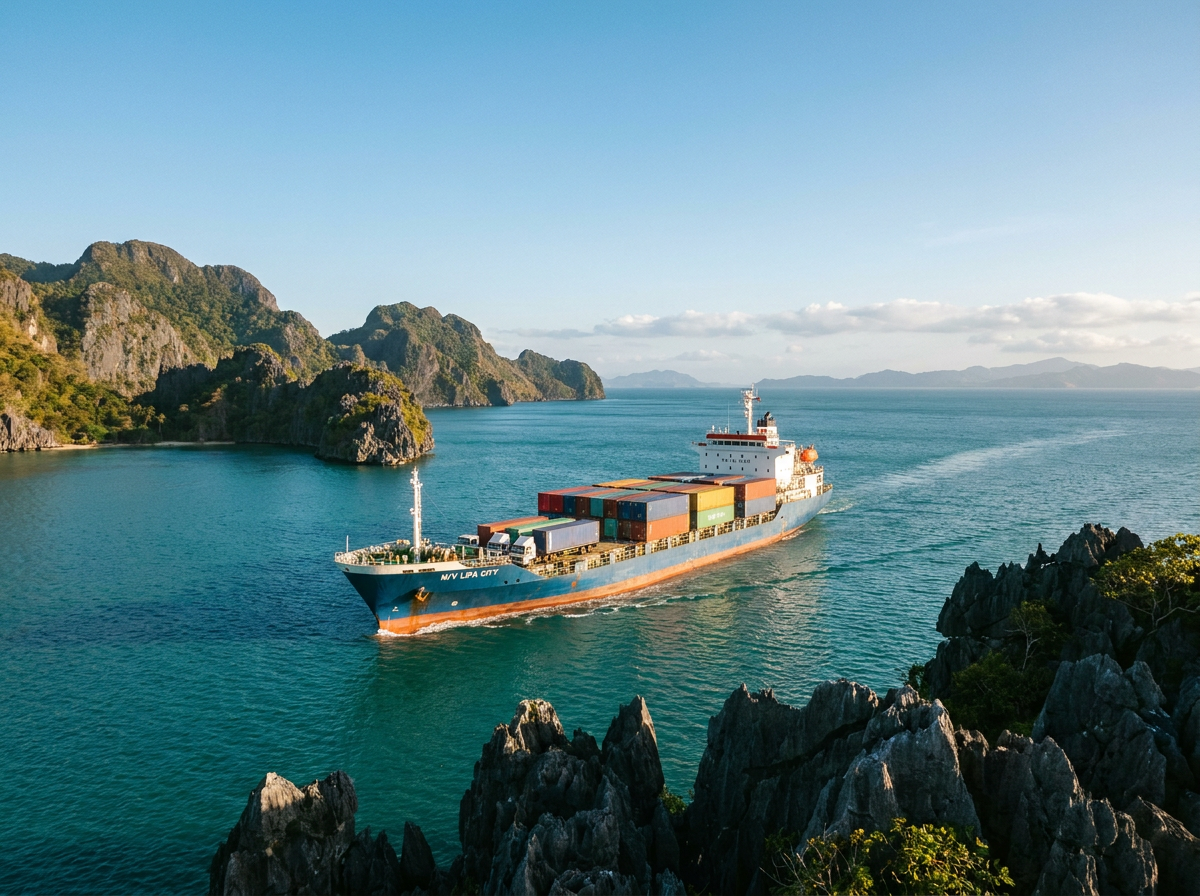
The Philippines is an archipelago of more than 7,600 islands. That geographic reality shapes virtually every aspect of commerce in this country — and it creates a set of transit risks that simply do not exist in the same way for landlocked economies. When a business in Cebu ships goods to a client in Davao, when a manufacturer in Pampanga sends a consignment aboard a RoRo ferry to Mindanao, or when a retailer in Manila receives imported stock that crosses multiple legs of sea freight — every one of those goods is exposed to the hazards of the open sea, vessel handling, port operations, and weather systems that the Philippines experiences with some of the highest frequency in the world.
Marine cargo insurance exists to protect the financial value of goods in transit against exactly these risks. Yet it remains one of the most underutilized lines of non-life insurance among Filipino small and medium enterprises. Many business owners ship goods on a routine basis without any cargo insurance in place — not because they have assessed the risk and decided it is acceptable, but because they have never been properly informed about what marine cargo insurance covers, how affordable it is relative to the protection it provides, or why the shipping line's own liability is far more limited than most shippers assume.
This guide focuses specifically on inter-island cargo insurance — the coverage most relevant to Filipino businesses that regularly ship goods between Philippine ports — explaining how it works, who needs it, what the common coverage gaps are, and practical tips for getting the right protection.
What Is Marine Cargo Insurance and Why Does Inter-Island Shipping Need It?
Marine cargo insurance is a type of non-life insurance that covers physical loss or damage to goods while they are in transit — whether by sea, air, or land. Despite the word “marine,” modern marine cargo policies typically cover goods throughout the entire transit journey, including loading and unloading operations, temporary storage at ports, and overland segments of the journey before or after sea carriage. In the Philippine context, this means a cargo policy issued for an inter-island shipment will generally cover the goods from the shipper's warehouse, through port handling, across the sea voyage, and to the consignee's premises.
The Philippine Ports Authority handles hundreds of inter-island shipping movements weekly across major routes — Manila to Cebu, Manila to Davao, Batangas to Caticlan, Matnog to Allen, and dozens more. Each of these routes carries cargo ranging from consumer goods and agricultural produce to construction materials, industrial equipment, and commercial merchandise. The risks along these routes are genuine and varied: typhoons and rough sea conditions, vessel accidents and groundings, theft and pilferage during port handling, water damage from sea spray or rain exposure, and accidental damage during loading and unloading.
Critical point on carrier liability: Many Filipino shippers believe the shipping line is responsible for their goods if something goes wrong. In practice, the carrier's liability is governed by the Carriage of Goods by Sea Act and the shipping line's own terms and conditions — and is almost always limited to a fraction of the actual cargo value. Carrier liability also does not cover acts of God, inherent vice of the goods, or losses arising from improper packing. Without your own cargo insurance, you bear the uncompensated difference.
Types of Marine Cargo Coverage Available in the Philippines
Marine cargo insurance in the Philippines is typically structured around internationally recognized Institute Cargo Clauses (ICC), published by the Institute of London Underwriters. These clauses define the scope of cover and are used by most Philippine insurers. There are three principal levels:
Institute Cargo Clauses (A) — All Risks
ICC (A) is the broadest form of marine cargo coverage available. It covers all risks of physical loss or damage to the insured goods, subject to standard exclusions. In the Philippine context, ICC (A) is appropriate for high-value goods, fragile cargo, and shipments where the business cannot afford any uncompensated loss. Standard exclusions under ICC (A) include losses attributable to the inherent nature of the goods (such as natural deterioration of perishables), improper packing or preparation by the shipper, deliberate damage by the insured, war and nuclear risks (which can often be added back as extensions), and ordinary leakage or wear and tear.
Institute Cargo Clauses (B) — Named Perils, Broader
ICC (B) covers a named list of perils including fire or explosion, vessel stranding, grounding, sinking or capsizing, overturning or derailment of a land vehicle, collision of the vessel with an external object, discharge of cargo at a port of distress, earthquake, volcanic eruption, or lightning, total loss of a package at sea or during loading or unloading, entry of sea lake or river water into the hold or container, and general average sacrifice. This is a mid-range option that covers the most common catastrophic scenarios without extending to all risks.
Institute Cargo Clauses (C) — Named Perils, Basic
ICC (C) is the most restricted standard form, covering only the most serious named perils: fire or explosion, stranding, grounding, sinking or capsizing, overturning or derailment of a land vehicle, collision, discharge at a port of distress, and general average sacrifice. ICC (C) is the minimum level of coverage and is generally not recommended for regular inter-island cargo shipments where handling and weather risks are material. It may be appropriate for very low-value, robust goods where the primary concern is catastrophic vessel loss rather than routine handling damage.
Open Policy vs. Per-Shipment Policy: Businesses that ship goods on a regular, recurring basis should consider an Open Policy — a standing marine cargo insurance arrangement that automatically covers all shipments declared under the policy throughout the policy period, rather than requiring a separate policy to be arranged for each individual shipment. An Open Policy simplifies administration, reduces the risk of forgetting to insure a particular shipment, and typically results in more competitive premium rates due to volume.
Who Needs Inter-Island Marine Cargo Insurance?
The short answer is: any Filipino business or individual that regularly ships or receives goods of significant value via inter-island sea freight or RoRo routes. The following groups face the most direct exposure.
- Manufacturers and distributors — businesses in Luzon shipping finished goods to Visayas and Mindanao markets, or sourcing raw materials and components from regional suppliers, face regular cargo exposure on every shipment
- Retailers and importers — Filipino businesses receiving containerized or breakbulk cargo through Manila, Cebu, or Davao ports for distribution to regional stores or warehouses
- Agricultural producers and exporters — fresh and processed food products shipped between islands require timely, reliable coverage given the perishable nature and time-sensitive value of the cargo
- Construction and infrastructure companies — steel, cement, equipment, and other construction materials shipped to project sites on Visayan or Mindanao islands are high-value and subject to physical damage and theft risks
- E-commerce and logistics operators — the rapid growth of Philippine e-commerce has created a large class of small business operators who regularly ship goods to customers in other regions, often without realizing they have meaningful cargo exposure
- Balikbayan box senders — while balikbayan boxes are typically shipped by licensed forwarders with some level of coverage, the terms vary widely and the declared value limits are often inadequate for the actual contents; additional all-risk cover is available and advisable for high-value boxes
Typhoon exposure: The Philippine Atmospheric, Geophysical and Astronomical Services Administration (PAGASA) records an average of 20 tropical cyclones entering the Philippine Area of Responsibility each year, with peak activity from July to October. This means inter-island shipping routes during the second half of the calendar year carry elevated weather risk. A cargo policy with typhoon and weather-related perils properly covered — typically under ICC (A) or as extensions under ICC (B) — is not optional for businesses shipping during typhoon season.
Common Misconceptions That Leave Filipino Shippers Unprotected
After nearly three decades in the Philippine insurance industry, I have seen the same misunderstandings about marine cargo insurance lead to preventable, significant business losses. These are the most common ones.
“The shipping line will pay if something happens to my cargo.”
This is the single most dangerous misconception in Philippine cargo shipping. Shipping line liability is strictly limited under the terms of the bill of lading and the Carriage of Goods by Sea Act. For containerized cargo, the carrier's liability is typically limited to a specific amount per package or per kilogram — amounts that are a small fraction of the actual commercial value of most cargo. Furthermore, the shipper bears the burden of proving that the loss was caused by the carrier's negligence, which is both difficult and time-consuming to establish. Marine cargo insurance bypasses this problem entirely by providing first-party coverage payable directly to the insured.
“My goods are in a sealed container — they cannot be damaged.”
Sealed containers offer meaningful physical protection under normal conditions, but they do not eliminate cargo risk. Containers can be dropped during crane operations, can be impacted by other cargo or equipment, can experience water ingress through damaged seals or condensation in humid Philippine conditions, and can be exposed to extreme temperature variations that damage temperature-sensitive goods. Breakbulk cargo — goods shipped outside of containers — faces additional risks from weather exposure and direct handling damage.
“Marine insurance is only for large importers or exporters.”
Inter-island cargo insurance is available and cost-effective for shipments of virtually any size and value. Premiums for a single inter-island shipment are calculated as a percentage of the cargo value — typically a very small fraction — and can provide comprehensive protection for goods worth tens of thousands of pesos or more. The threshold for marine cargo insurance to make financial sense is much lower than most SME owners assume.
“The forwarder handles insurance — I do not need to worry about it.”
Freight forwarders and logistics providers often offer cargo insurance as an add-on service. However, the coverage arranged by the forwarder may not be calibrated to the full replacement value of your goods, may carry deductibles or exclusions that create significant coverage gaps, and may not cover all legs of the transit journey. Cargo owners should always review the specific terms of any coverage arranged by their forwarder and should strongly consider arranging their own marine cargo insurance — especially for high-value shipments.
Practical Tips for Getting the Right Marine Cargo Coverage
Securing marine cargo insurance that actually pays when you need it requires attention to a few key factors that are frequently overlooked.
- Insure for the full commercial invoice value, plus freight and insurance costs. The standard marine insurance basis is CIF (Cost, Insurance, Freight) plus ten percent, which reflects the actual replacement cost including the cost of arranging a replacement shipment. Under-insuring your cargo means any loss will be settled proportionally below its full value.
- Specify the correct commodity and packing details. Marine cargo insurers rate policies based on the nature of the goods, the packing method, and the voyage involved. Inaccurate or vague commodity descriptions can create disputes at claims time. Always be specific and accurate in your cargo declaration.
- Confirm that typhoon and natural catastrophe perils are included. In the Philippine context, coverage that excludes weather-related perils is inadequate for the majority of inter-island routes during the second half of the year. Ensure your policy explicitly covers storm, typhoon, and flood risks.
- Understand the transit clause — the warehouse-to-warehouse coverage period. Confirm when coverage attaches (at the shipper's warehouse, at point of loading, or at departure port) and when it terminates (at the consignee's warehouse, at the destination port, or within a fixed number of days after discharge). Gaps at either end of the transit are a common source of uninsured losses.
- Document your cargo before shipment. Photographs of the goods and their packing, a complete packing list, and a copy of the commercial invoice should be retained for every shipment. In the event of a claim, prompt and complete documentation is the most important factor in ensuring efficient settlement.
- Work with an independent insurance advisor. Marine cargo insurance terms, conditions, and premium rates vary significantly between providers. An independent advisor — not a tied agent limited to a single insurer — can compare coverage from multiple Insurance Commission-accredited companies and identify the policy that best fits the nature, volume, and value of your shipments.
Get a Free Quote Today
Ready to protect what matters most? Our insurance experts are here to help you find the right marine cargo coverage at the best price. OneNetworx Insurance Agency compares options from multiple Insurance Commission-accredited providers — so your inter-island shipments are protected from warehouse to warehouse, no matter which route they take.
🌐 www.onenetworxinsurance.com
About the Author
Angelo Villamejor is a former financial wealth branch manager at a top Philippine life insurance company and a GAMA Awardee, with nearly three decades of experience spanning insurance brokerage, bancassurance, non-life and life insurance leadership. He leads OneNetworx Insurance Agency with a focus on giving Filipino families and businesses unbiased, expert guidance to find coverage that holds up when it matters most.