
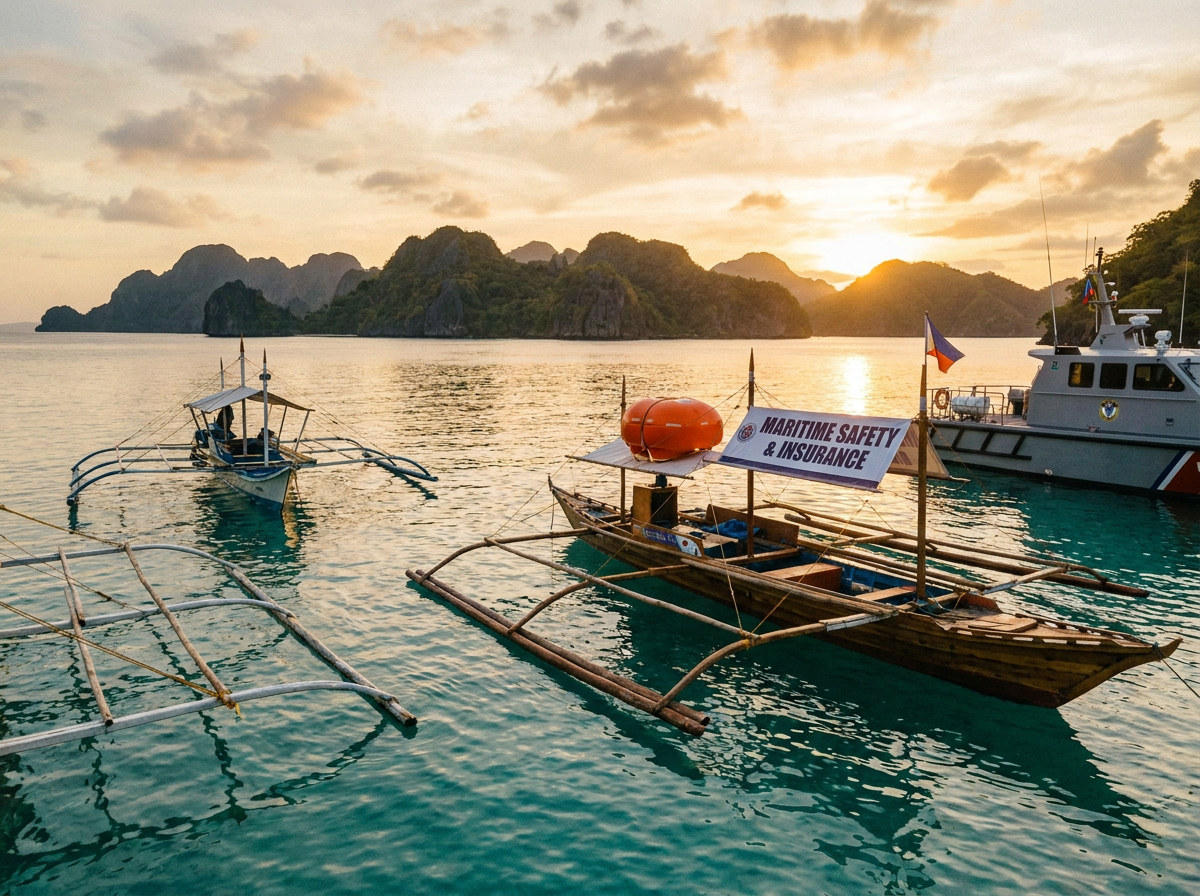
The Philippines is an archipelago of over 7,600 islands — and for millions of Filipinos, the sea is not just geography. It is commerce, livelihood, and daily life. From the fishing families of Batangas and Zamboanga, to the inter-island ferry operators connecting Visayas and Mindanao, to the thriving island-tourism boat operators around Palawan and Siargao — vessels of all sizes are essential assets in the Philippine economy.
Yet marine hull insurance — the coverage that protects the physical vessel itself — remains one of the most underutilized forms of insurance in the country. Many vessel owners assume their boat is too small to insure, that coverage only applies to large commercial ships, or that their banca or ferry simply does not qualify for any formal insurance protection.
This guide explains what marine hull insurance covers, who needs it in the Philippine context, why our archipelagic geography creates unique and serious maritime risks, and how to choose a policy that genuinely protects the vessel you depend on.
What Is Marine Hull Insurance — and How Is It Different from Marine Cargo Insurance?
Marine hull insurance covers the physical structure of a vessel — its hull, machinery, and onboard equipment — against loss or damage from maritime perils. It is distinct from marine cargo insurance, which protects the goods being transported by sea rather than the vessel carrying them.
A standard marine hull policy typically covers:
- Perils of the sea — storms, rough seas, flooding, grounding, sinking, and stranding
- Fire and explosion
- Violent theft and piracy
- Collision with another vessel or fixed object
- Damage during cargo operations — loading, unloading, or shifting of cargo or equipment
- General average — the shared financial loss when cargo or equipment is jettisoned to save the vessel and its crew
More comprehensive policies extend to Protection and Indemnity (P&I) coverage, which addresses third-party liability — including bodily injury or death of crew and passengers, and damage caused to other vessels or port structures.
Hull vs. cargo — why you may need both: A fire that destroys a cargo vessel destroys both the goods and the ship. Marine cargo insurance pays for the lost goods; marine hull insurance pays for the lost vessel. For commercial operators, both forms of coverage are essential to a complete picture of marine risk protection.
Who Needs Marine Hull Insurance in the Philippines?
Marine hull insurance applies to a broader population of Filipino vessel operators than most people realize.
Commercial Fishing Boat Operators
The Philippine fishing industry employs over 1.5 million fisherfolk. A motorized fishing vessel — including a small banka with an outboard motor — represents a significant capital investment for a fishing family. A typhoon, collision, or engine fire can destroy that investment entirely, taking the family's primary livelihood with it.
Passenger and Cargo Ferry Operators
RO-RO (Roll-on/Roll-off) vessels, small passenger bancas, and domestic cargo carriers operating inter-island routes face constant weather and navigational exposure. Marina-registered commercial vessels on licensed domestic routes are typically required to carry hull insurance as a condition of their certificate of public convenience.
Island Tourism and Island-Hopping Boat Operators
The growth of Philippine island tourism has created a thriving industry of small vessel operators in Palawan, Cebu, Siargao, Batangas, and elsewhere. These operators carry paying passengers daily — hull coverage combined with P&I liability coverage is essential protection for both the vessel and the operator's business.
Private Yacht and Leisure Boat Owners
The Philippine leisure boating market is growing steadily. Private yacht and motorboat owners bear full financial responsibility for any damage to their vessels — and hull insurance is the standard protection for this exposure.
Philippine-Specific Maritime Risks That Make Hull Coverage Essential
The Philippines faces maritime risks that are particularly acute compared to many other countries — and that make hull insurance not a luxury but a practical necessity.
Typhoons
The Philippines is hit by an average of 20 typhoons per year. Vessels moored in coastal areas face real exposure to storm surge, wave damage, and sinking during typhoon season — particularly in open anchorages or exposed fishing ports. The critical point: government disaster relief does not compensate individual vessel owners for these losses. Hull insurance does.
Shallow Reefs and Navigational Hazards
Philippine waters include numerous shallow reefs, sandbars, and narrow inter-island channels — particularly throughout the Visayas — that create grounding and stranding risks, especially for vessels operating at night or in poor visibility. Stranding damage can be severe and expensive, requiring salvage operations that are fully covered under a comprehensive hull policy.
Fire in Densely Moored Areas
Fires in fishing ports and pier areas can spread rapidly among closely moored vessels. A single fire event can destroy multiple boats simultaneously. Without hull insurance, the financial loss falls entirely and immediately on the vessel owners involved — with no recourse and no recovery pathway.
A common misconception: Many Filipino vessel owners believe that if another party causes damage to their vessel, that party's insurance will cover the loss. In practice, establishing liability and recovering from a third-party insurer can take months or years — if it succeeds at all. Your own hull policy settles directly with you.
How to Choose the Right Marine Hull Policy
Selecting the right marine hull policy involves several practical considerations beyond just the premium rate.
Agreed Value vs. Market Value
Policies are typically written on either an Agreed Value basis (the sum insured is established at inception and paid in full on total loss) or a Market Value basis (settlement is based on the vessel's assessed value at the time of the loss). Agreed Value is generally preferable — it removes valuation disputes at claim time and gives vessel owners certainty about what they will receive if the worst happens.
Area of Operation
Most policies specify a geographic Institute Warranty Limit — coverage is valid only within that defined area. Voyages outside the warranted area require advance notification and may require an additional premium. Make sure your policy accurately reflects where you actually operate. An inter-island operator whose policy specifies a single region may find coverage voided on a voyage that strays outside that boundary.
Protection and Indemnity (P&I) Coverage
If your vessel carries crew or passengers, liability coverage is essential — and for commercial passenger vessels, it is required by Maritime Authority regulations. Confirm whether P&I coverage is included in your hull policy or whether a separate policy is needed to properly address crew and passenger liability.
Provider Claims Track Record
Premium rates matter — but so does how a provider actually handles marine hull claims, particularly partial loss claims requiring surveyor coordination and repair approval. An independent insurance agency has visibility into provider-specific claims practices and can advise on which insurers consistently perform well for marine hull clients in the Philippines, not just which offers the lowest rate on paper.
Get a Free Quote Today
Ready to protect what matters most? Our insurance experts are here to help you find the right marine hull coverage at the best price. OneNetworx Insurance Agency compares options from multiple top Philippine marine insurers — so your vessel is genuinely protected, whatever the sea brings.
🌐 www.onenetworxinsurance.com
About the Author
Angelo Villamejor is a former financial wealth branch manager at a top Philippine life insurance company and a GAMA Awardee, with nearly three decades of experience spanning insurance brokerage, bancassurance, non-life and life insurance leadership. He leads OneNetworx Insurance Agency with a focus on giving Filipino families and businesses unbiased, expert guidance to find coverage that holds up when it matters most.