
By Angelo Villamejor — Former Financial Wealth Branch Manager at a top Philippine life insurance company, GAMA Awardee
The Philippine construction industry is in the middle of a historic boom. The government's "Build Better More" infrastructure program is driving thousands of public works projects across the country. Private development continues to surge in Metro Manila, Bulacan, Cebu, and Davao. For Filipino contractors, developers, and project owners, the opportunities have never been greater.
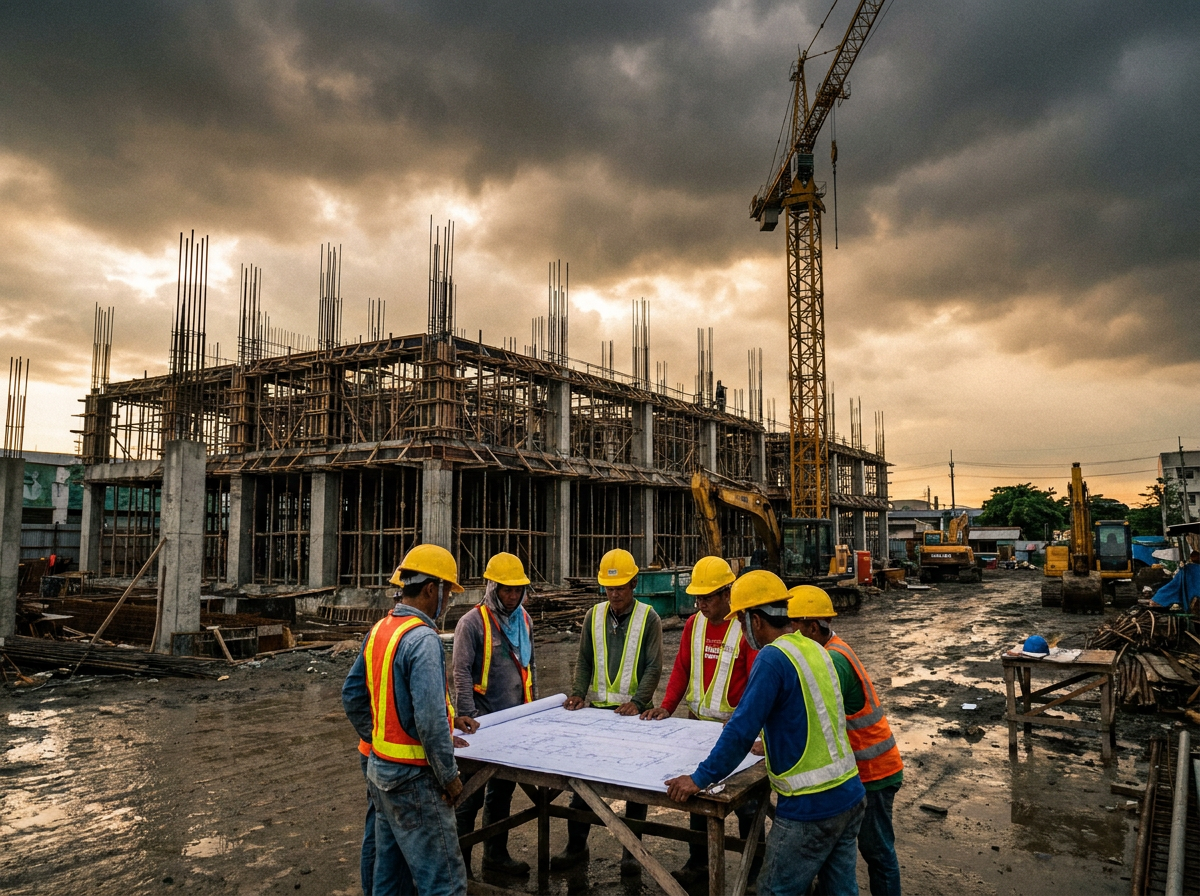
But with those opportunities come risks that are uniquely Philippine. Every construction site in this country is exposed to a combination of hazards few other markets face simultaneously: an average of 20 typhoons per year, monsoon flooding, landslides, earthquakes, fire, theft, and the ever-present risk of third-party injury or property damage in densely populated areas. A single storm event can destroy months of work and millions of pesos in materials in a matter of hours.
This is where Contractor's All Risks (CAR) insurance comes in. It is a specialized engineering insurance product designed specifically for the construction phase of a project, built around the realities of a live construction site where the risk profile changes daily as the structure takes shape. Whether you are a small contractor taking on your first DPWH project, a mid-size developer building a residential subdivision, or a project owner financing a commercial build, understanding CAR insurance is essential to protecting your investment.
What Is Contractor's All Risks (CAR) Insurance?
Contractor's All Risks insurance — commonly abbreviated as CAR — is an engineering insurance product that provides comprehensive coverage for construction projects during the build phase. It protects the physical works, the materials on site, and the contractor's liability to third parties, all under a single policy.
What sets CAR insurance apart from standard property or general liability insurance is its scope and structure. Standard property insurance covers completed structures — a finished building, an operational factory, a furnished home. General liability insurance covers bodily injury and property damage to third parties, but typically excludes the contractor's own work in progress.
CAR insurance bridges that gap. It covers the project itself — the incomplete structure, the materials stored on site, the temporary works, the scaffolding, the formwork — while also extending to third-party liability arising from construction activities. This dual coverage makes it the most complete form of protection available during the construction phase.
Why Philippine Construction Projects Need CAR Insurance
The Philippines presents a uniquely challenging environment for construction. Here is why CAR insurance is not just advisable but essential:
🌪️ Natural Disaster Exposure
The Philippines sits squarely in the Pacific typhoon belt and along the Pacific Ring of Fire. Typhoons, flooding, landslides, and earthquakes are not rare events — they are recurring features of doing business here. A construction site with incomplete structures, exposed materials, and temporary works is far more vulnerable to these perils than a completed building with permanent roofing and sealed envelopes.
🏗️ Government Infrastructure Requirements
The "Build Better More" program and related DPWH initiatives have accelerated infrastructure development nationwide. Many government contracts require contractors to demonstrate adequate insurance coverage as a condition of award. CAR insurance is frequently the specified product, and for good reason — it is the only policy type purpose-built for construction-phase risks.
🏙️ Urban Density and Third-Party Risk
Construction in Metro Manila, Meycauayan, Valenzuela, and other dense urban areas means projects are often surrounded by neighboring properties, pedestrians, and vehicular traffic. Excavation can damage adjacent foundations. Falling debris can injure passersby. Scaffold collapse can damage parked vehicles. CAR insurance's third-party liability section addresses these real-world exposures that no contractor can fully eliminate through site safety measures alone.
🏦 Financial Protection for Owners and Lenders
Banks and financial institutions financing construction projects often require CAR insurance as a loan condition. Without it, a single catastrophic event during construction could wipe out the project's financial viability — leaving the owner with an incomplete structure, no funds to rebuild, and outstanding loan obligations.
What CAR Insurance Covers — and What It Excludes
What Is Covered
A standard CAR policy includes two main sections:
Section 1: Material Damage
Covers physical loss or damage to the contract works — including permanent works (the structure being built), temporary works (scaffolding, formwork, shoring), and materials stored on site. Covered perils typically include fire, lightning, explosion, storm, flood, landslide, earthquake, theft, and malicious damage — perils particularly relevant in the Philippines where typhoons and flooding are annual certainties.
Section 2: Third-Party Liability
Covers the contractor's legal liability for bodily injury to third parties or damage to third-party property arising from construction activities. If excavation work causes a neighboring building's wall to crack, or if a falling object injures a pedestrian, this section responds.
Extended Maintenance Period
Many CAR policies include a maintenance period — typically 12 to 24 months after project handover — during which the contractor remains covered for defects that manifest after completion. This is particularly important for DPWH and government projects where warranty obligations are contractually mandated and performance bonds are held until the maintenance period expires.
Common Exclusions
While CAR insurance is comprehensive, it is not all-encompassing. Typical exclusions include:
- Wear and tear, gradual deterioration, and inherent defects in design or materials
- Damage caused by the contractor's willful acts or gross negligence
- Consequential losses such as loss of profit or delay penalties (unless specifically endorsed)
- Defective workmanship requiring rectification — the policy covers resulting damage, not the cost of redoing the defective work itself
- Nuclear contamination, war, and terrorism (unless separately endorsed)
Common Misconceptions About CAR Insurance
"My general liability policy already covers the project."
Standard Commercial General Liability (CGL) policies are designed for completed operations and ongoing business activities — not for the unique, evolving risks of a construction site. They typically exclude damage to the insured's own work in progress, which is precisely what CAR insurance covers.
"The contractor's CGL is enough."
Even when a contractor carries a CGL policy, it does not cover material damage to the works themselves. If a typhoon destroys a half-completed building, the CGL will not pay for the reconstruction. CAR insurance will.
"CAR insurance is only for large developers."
CAR policies can be tailored to projects of any size — from a small residential renovation to a multi-billion-peso infrastructure project. Premiums are typically calculated as a percentage of the total contract value, making coverage proportionate to the project's scale. Small and mid-size contractors working on local DPWH projects or private home builds can and should secure CAR coverage.
"The project is small, so the risk is low."
Even a modest construction project in the Philippines is exposed to typhoons, flooding, and third-party claims. The financial impact of an uninsured loss on a small contractor can be devastating — potentially ending the business entirely.
Erection All Risks (EAR): The Sibling Product
While CAR insurance covers building and civil construction, Erection All Risks (EAR) insurance is its sibling product, designed for the installation, testing, and commissioning of machinery and equipment. If your project involves installing industrial machinery, power generation equipment, manufacturing lines, or large-scale HVAC systems, EAR insurance provides the same type of comprehensive protection during the erection and testing phase.
Some projects — particularly industrial facilities — require both CAR and EAR coverage, as the construction phase and the equipment installation phase carry different risk profiles. An independent insurance agency can help you determine which combination fits your project by comparing terms across multiple insurers to find the most appropriate structure.
Choosing the Right CAR Coverage: Practical Tips
- ✅Declare the full project value accurately. The sum insured should reflect the total contract value, including materials, labor, and overhead. Underinsurance can result in coinsurance penalties; overinsurance wastes premium. Get the number right from the start.
- ✅Define the scope of works clearly. The policy schedule should accurately describe the nature of the works — building construction, road works, bridge construction, site development. Ambiguity in the scope description can lead to disputes at claims time.
- ✅Set the period of insurance correctly. CAR policies are issued for the project duration with specific start and end dates. If the project is delayed, the policy must be extended — otherwise, work performed after the expiry date is uninsured. Build in a buffer or arrange an automatic extension clause.
- ✅Consider the maintenance period. Government contracts often require a warranty period after handover. Ensure your CAR policy includes a maintenance period that matches or exceeds your contractual obligation — typically 12 to 24 months.
- ✅Review deductibles carefully. Higher deductibles reduce premium but increase your out-of-pocket exposure in a claim. For projects in high-risk typhoon zones, pay special attention to storm and flood deductibles, which are often set higher than the standard deductible.
- ✅Work with an independent agent. Because CAR insurance is a specialized product, terms, conditions, and pricing vary significantly across insurers. An independent agency that represents multiple providers — rather than a single tied agent — can compare offerings and negotiate the best terms for your specific project.
The bottom line: In a country where a single typhoon can erase months of construction progress, relying on a standard liability policy to protect your build is a gamble. Contractor's All Risks insurance is the only coverage built around the realities of a Philippine construction site — and securing the right policy starts with understanding what it does and does not do.
Get a Free Quote Today
Ready to protect what matters most? Our insurance experts are here to help you find the right coverage at the best price.
🌐 www.onenetworxinsurance.com
About the Author
Angelo Villamejor is a former financial wealth branch manager at a top Philippine life insurance company and a GAMA Awardee, with nearly three decades of experience spanning insurance brokerage, bancassurance, non-life and life insurance leadership. He leads OneNetworx Insurance Agency with a focus on giving Filipino families and businesses unbiased, expert guidance to find coverage that holds up when it matters most.