
By Angelo Villamejor — Former Financial Wealth Branch Manager at a top Philippine life insurance company, GAMA Awardee
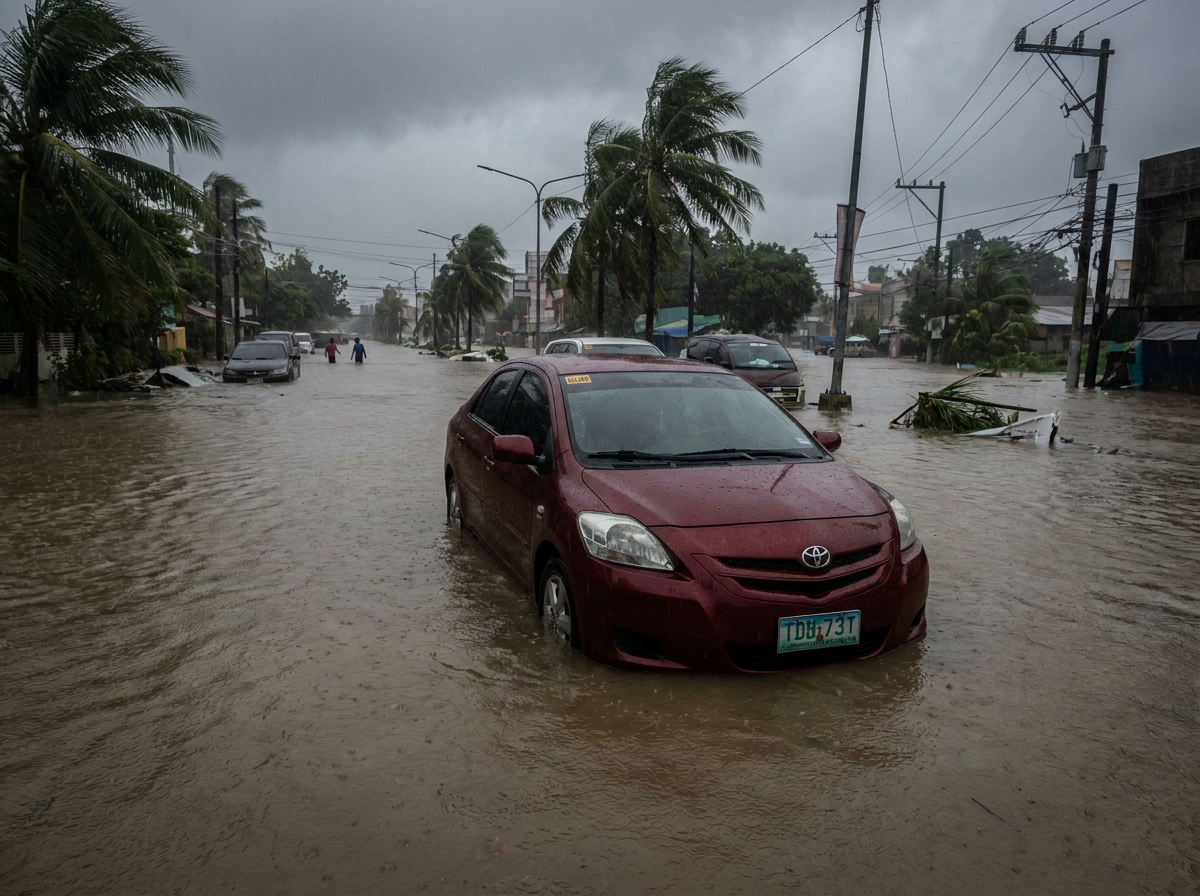
Every year, without fail, the Philippines is visited by an average of 20 named tropical cyclones — roughly half of them making landfall. When a typhoon passes through Metro Manila, Bulacan, or the surrounding provinces, the images that follow are almost always the same: streets turned into rivers, parked cars submerged up to their roofs, and stranded vehicles abandoned along flooded highways.
And every year, thousands of Filipino car owners discover the same painful lesson at the claims counter: a standard comprehensive motor car insurance policy does not automatically cover typhoon and flood damage. That protection comes from a specific addition called Acts of Nature (AON) coverage — and not every policyholder has it.
This guide breaks down what Acts of Nature car insurance actually covers, why it matters so much in the Philippines, how it differs from your base comprehensive policy, the most common reasons flood-related claims get denied, and what every Filipino driver should do before the next storm arrives. Whether you drive a daily commuter in Meycauayan or manage a fleet in Metro Manila, understanding AON coverage is one of the most practical insurance decisions you can make this typhoon season.
What Is Acts of Nature (AON) Coverage in Car Insurance?
Acts of Nature coverage — sometimes written as "Acts of God" on older policy forms — is an optional extension to your comprehensive motor car insurance that protects your vehicle against damage caused by natural events. In the Philippine insurance market, AON typically covers typhoons, floods, earthquakes, volcanic eruptions, tsunamis, and landslides.
Here is the critical point that confuses many car owners: comprehensive car insurance and Acts of Nature coverage are not the same thing. A "comprehensive" policy generally covers collision, theft, fire, third-party bodily injury, and property damage to others. It does not, by default, include damage from flooding or typhoon-force winds. AON is purchased as an add-on — usually for an additional premium calculated as a small percentage of your vehicle's insured value.
The Insurance Commission of the Philippines regulates the general framework for these coverages, but the specific terms, exclusions, and deductibles vary from one insurance provider to another. This is exactly where an independent agency like OneNetworx becomes valuable — because we compare AON terms across multiple top insurers, not just one. You see the differences in coverage, deductibles, and pricing side by side, and you choose the policy that genuinely protects you during storm season.
Why Filipino Drivers Need AON Coverage More Than Most
The Philippines sits squarely along the Pacific typhoon belt and within the Pacific Ring of Fire. That dual exposure means Filipino vehicles face a combination of risks that drivers in many other countries rarely encounter together: intense tropical cyclones, seasonal monsoon flooding, and the occasional earthquake or volcanic event.
Consider what happens during a single strong typhoon. In low-lying areas of Metro Manila and Bulacan — including Meycauayan, Marilao, Valenzuela, and Obando — floodwaters can rise within hours, submerging vehicles parked in driveways, garages, and roadside lots. Even a vehicle parked safely inside a ground-floor garage can be flooded out. Once water reaches the engine bay or the cabin electronics, repair costs can easily reach hundreds of thousands of pesos — and in many cases, the vehicle is declared a total loss.
Without AON coverage, the car owner bears that entire loss. With AON coverage, the insurer pays for the repair or the declared total loss, subject to the policy's deductible and sum insured. Given that the Philippines experiences typhoon season from roughly June through November each year, going without AON for even a single renewal period is a significant gamble — especially for a vehicle that represents a family's livelihood or a business's daily operations.
What AON Covers — and What It Usually Excludes
Knowing what is included is only half the picture. Equally important is understanding the exclusions, because that is where most disputes at claims time arise.
Typically Covered
- Flood damage — engine, interior, electronics, and body damage caused by submersion or water ingress
- Typhoon and windstorm damage — including damage from flying debris, fallen trees, and collapsed structures during a named storm
- Earthquake damage — physical damage to the vehicle caused by seismic activity
- Other natural perils — volcanic eruption, tsunami, and landslide, depending on the specific policy wording
Common Exclusions and Limitations
- Driving through flooded roads. Many insurers will not pay if the vehicle was deliberately driven into a flooded street — AON typically covers stationary or naturally-stranded vehicles, not reckless driving through deep water
- Wear and tear or pre-existing damage. AON covers sudden, accidental damage from a natural event — not rust, deterioration, or damage that existed before the typhoon
- Consequential damage from negligence. If the owner failed to take reasonable steps (for example, ignoring an evacuation order and leaving the vehicle in a known flood zone), some policies may reduce or deny the claim
- Engine hydrostatic damage without flood coverage. Some insurers treat engine damage from ingesting water as a separate consideration — which is why reading the policy wording matters before you buy, not after a storm
The exclusions above are general patterns, not universal rules. Every insurance company writes its AON clause differently, and the details are usually buried in the policy's fine print. At OneNetworx, we walk our clients through the actual wording of each policy — not just the marketing summary — so there are no surprises when a claim is filed.
How to Avoid the Most Common Flood Claim Denials
Even with AON coverage in place, claims can still be denied if the policyholder mishandles the situation. Here are the most practical steps every Filipino driver should take — both before and immediately after a typhoon — to protect their claim.
- Confirm AON is active before storm season. Pull out your policy and verify that Acts of Nature is listed as an active coverage, with the correct sum insured. Many car owners assume it is included when it was never added
- Do not start a flooded engine. Attempting to start a water-submerged engine is one of the fastest ways to turn repairable damage into a total loss — and some insurers may cite this as negligence. Have the vehicle inspected and towed
- Document everything immediately. Take clear photos and videos of the vehicle, the surrounding flood level, and any visible damage as soon as it is safe to do so. Time-stamped documentation is powerful evidence
- Report the claim promptly. Most policies require notice within a specific number of days. Delays give insurers a reason to question the claim
- Keep repair and towing records. Retain all receipts, towing logs, and the insurer's own damage assessment report. These documents support your claim and speed up settlement
Following these steps does not guarantee a claim will be paid — the insurer still applies the policy terms — but it removes the most common reasons claims are reduced or denied. And if a dispute does arise, having clean documentation gives your agent the leverage to advocate on your behalf.
Why Your Choice of Agency Matters During Typhoon Season
When a typhoon hits, you do not want to be on the phone with a tied agent who can only offer you one insurer's terms. You want an advocate who can compare, advise, and act across multiple providers. That is the difference an independent agency makes — and it matters most when the weather turns.
🤝 Multi-Provider Access
We compare AON coverage terms, deductibles, and premiums across multiple top Philippine non-life insurers — so you get real protection at the best available price. Why choose one, when you can choose Onenetworx?
🎓 Three Decades of Expertise
Our leadership brings nearly 30 years of insurance industry experience — spanning brokerage, insurance companies, bancassurance, and both non-life and life insurance. That depth informs every policy we recommend.
📚 Trained Personnel
Our Internal Insurance Academy ensures every team member understands the fine print of AON clauses — so you are never sold a policy with gaps you did not know about.
📍 Local Presence
Based in Meycauayan City, Bulacan, we serve drivers across Metro Manila and surrounding provinces with a personal, face-to-face approach — exactly the kind of support you want when filing a flood claim.
The bottom line: Typhoon and flood damage is not a remote possibility in the Philippines — it is a recurring reality. Acts of Nature coverage is the specific protection that stands between your vehicle and a six-figure repair bill. Review your policy before the next storm, confirm your AON is active, and make sure your coverage is structured by someone who can compare the market, not just sell you one company's product.
Get a Free Quote Today
Ready to protect what matters most? Our insurance experts are here to help you find the right coverage at the best price.
🌐 www.onenetworxinsurance.com
About the Author
Angelo Villamejor is a former financial wealth branch manager at a top Philippine life insurance company and a GAMA Awardee, with nearly three decades of experience spanning insurance brokerage, bancassurance, non-life and life insurance leadership. He leads OneNetworx Insurance Agency with a focus on giving Filipino families and businesses unbiased, expert guidance to find coverage that holds up when it matters most.